TECHNOLOGY
Technology Introduction
A differentiated heating method. Precise power control is possible because the way heat is made is fundamentally different.
Ion Heating
Heat is generated
directly inside the water
The same principle as ion-thrust aircraft and ion spacecraft that fly without fuel — heat is produced using ions. Each electron rubs against each water molecule to create heat.
At the same temperature the heat density is finer and higher. That is why it cools down slowly and uses less energy.
Comparison
Efficiency by heating method
Energy conversion efficiency measured under identical conditions, as of 2026.
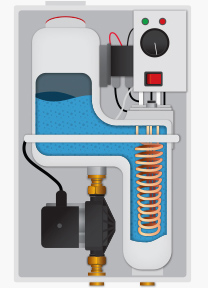
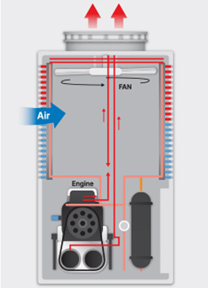
| Category | Gas Boiler | Electric Boiler | Heat Pump | Ion Heating System |
|---|---|---|---|---|
| Image | 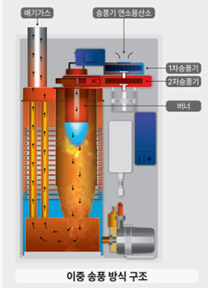 |
 |
 |
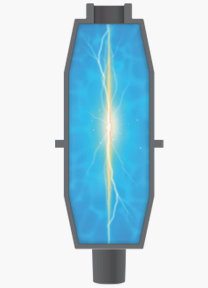 |
| Principle | Combustion | Metal electric resistance | Moves low-grade heat to high-grade | Molecular friction of water |
| Energy conversion efficiency | 80% | 90% | 65% | 99.9% |
| Heat transfer | Heat transferred to water | Water produces heat directly | ||
Core
Three core technologies
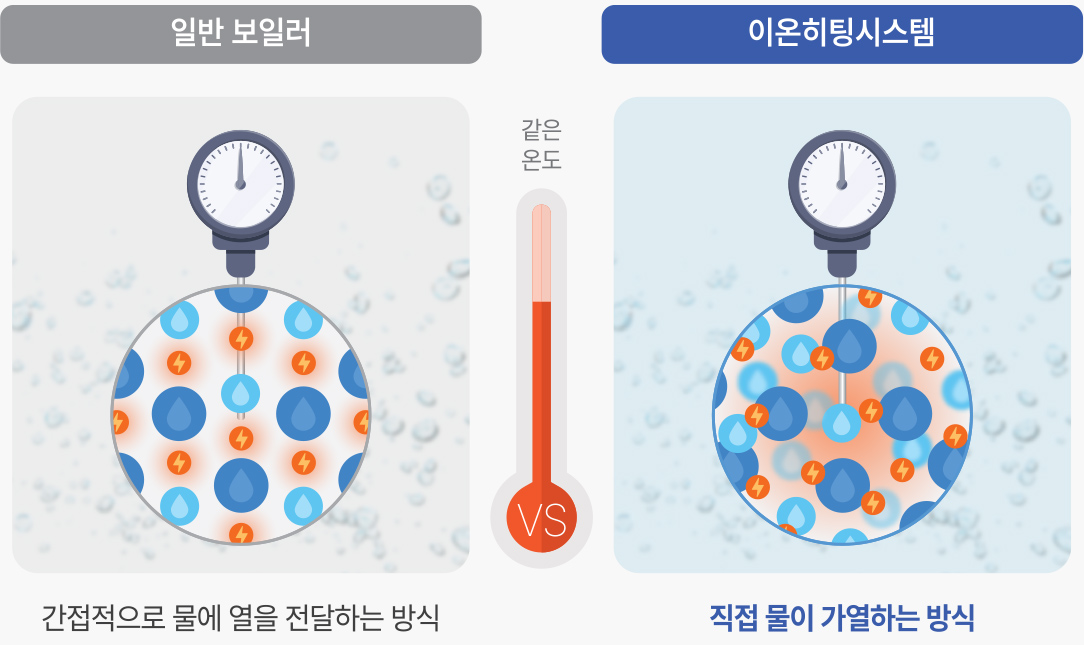
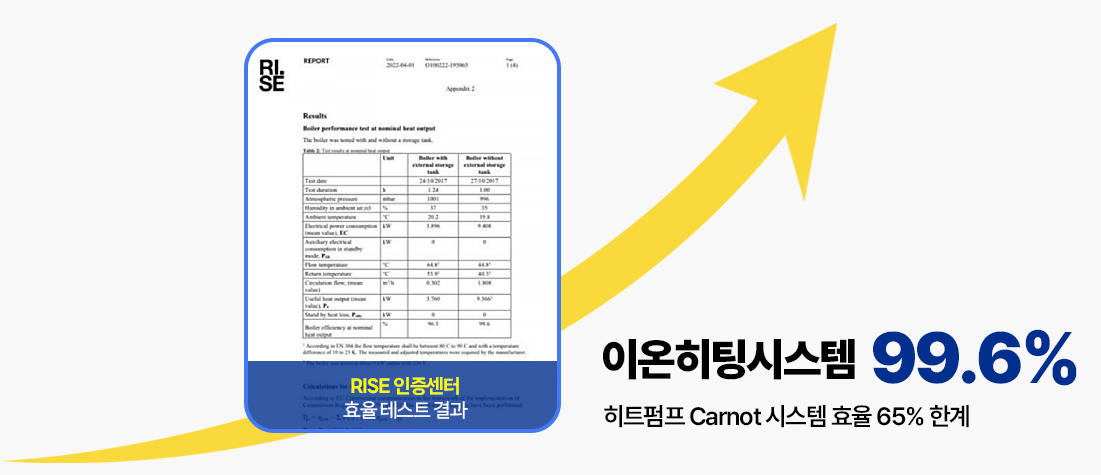
Differentiated heating
Because the water produces heat itself, energy conversion efficiency reaches 99.6% and above.
AI precision control
AI detects 0.5°C changes in real time and controls power in 10 steps down to 0.1 kW, sharply cutting cumulative consumption.
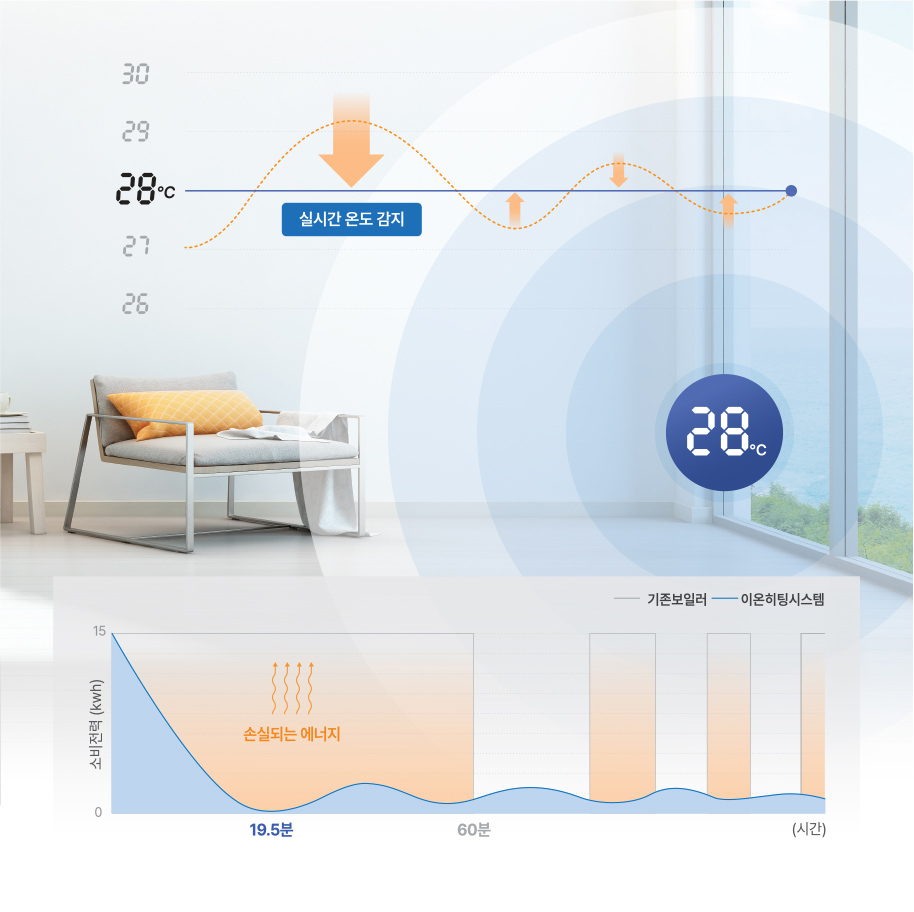
Exergy efficiency
Precise AI power control produces only the heat required, so no heat is wasted.
Field Test
Don't be misled by efficiency claims.
We reproduced winter and measured.
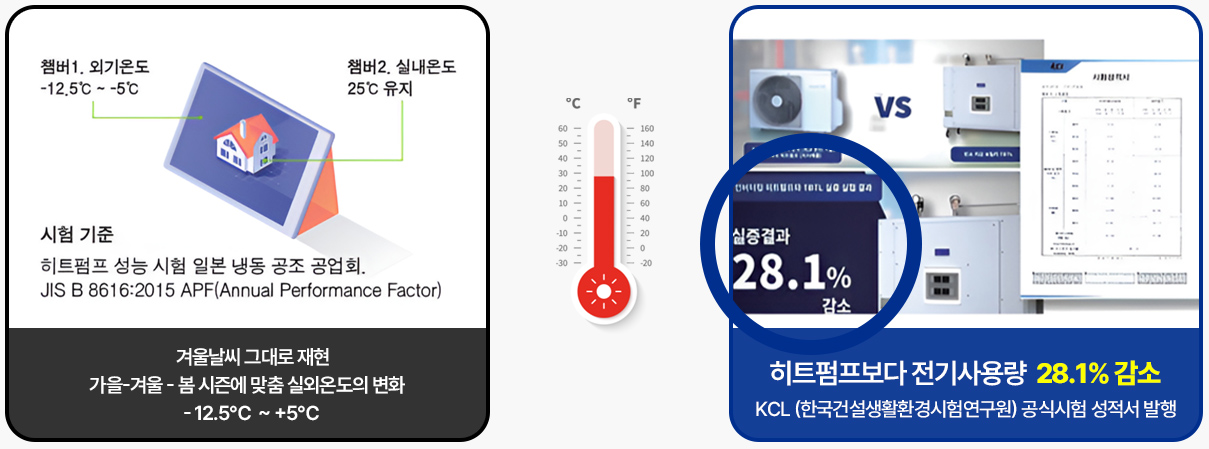
Electricity consumption demonstration against our own inverter heat pump under identical conditions. Results vary by site.
- 0%Less electricity than a heat pumpReproduced winter conditions · consumption test
- 0×Faster than an electric boilerHot water test vs. equivalent resistance-type model
- 0%Energy conversion efficiencyWater produces the heat directly
- 0°CAI detection step0.1 kW controlled in 10 steps
Test Data
Demonstration test results
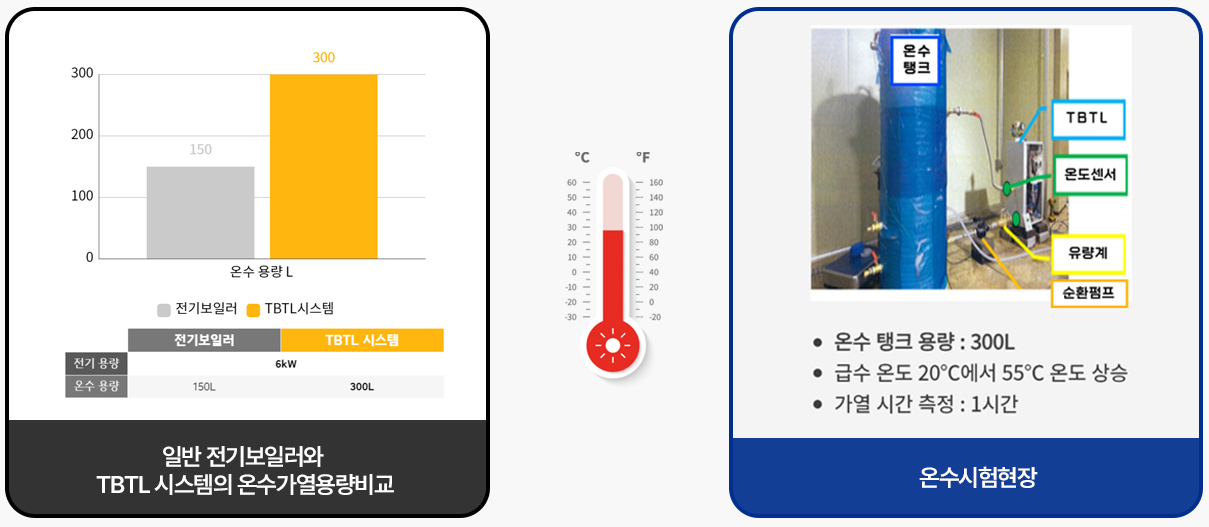
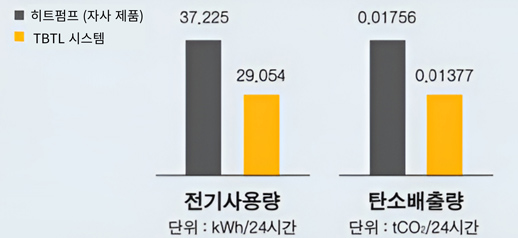
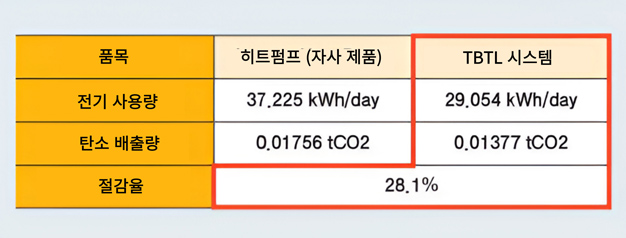
Because it raises temperature in half the time and then idles, energy is saved compared with an electric boiler.
FAQ
Frequently asked questions
How is ion heating different from an electric boiler?
An electric boiler heats a metal resistance element and transfers that heat to water. Ion heating uses ions in the water so the water itself produces heat by molecular friction. Efficiency rises from 90% to 99.9% and heating is roughly twice as fast as an equivalent electric boiler.
Does it really use less electricity than a heat pump?
In a demonstration test reproducing winter conditions it used 28.1% less electricity than our own inverter heat pump. Heat pump efficiency falls as outdoor temperature drops, whereas ion heating is unaffected by outdoor air. Results vary by site.
What does the AI control actually do?
The AI detects temperature changes as small as 0.5°C in real time and controls power in ten steps down to 0.1 kW. It calculates outdoor temperature and deviation so only the required heat is produced, which sharply reduces cumulative electricity consumption.
Where was the 99.9% efficiency verified?
Through KCL hot water performance testing and a KCL power consumption comparison against a heat pump, plus KTL electrical safety testing. A paper was also published in the Korean Physical Society journal. Original test reports are available on request.